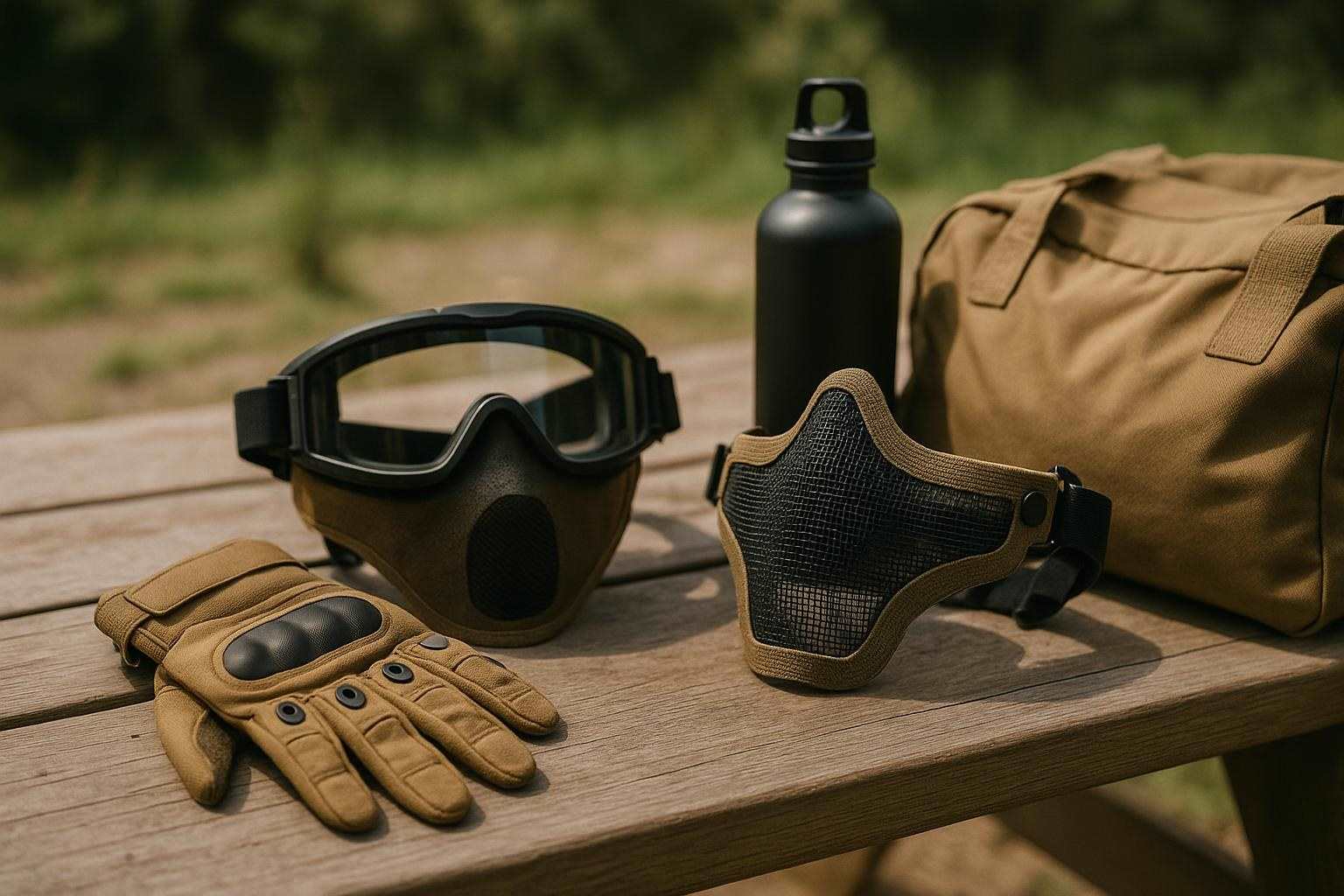
A full day at the field is not made easier by carrying equipment. New players do not need a tuned replica or a large loadout before learning the basics. Reliable eye protection, a functioning primary setup, water, food and a clear understanding of the venues rules prevent problems than extra accessories. This first-day checklist focuses on checks and sensible decisions before a minor issue becomes a safety problem or ends your day early.
Start with protection that stays on
Eye protection is non-negotiable. Use equipment accepted by the venue and designed for the impacts involved; ordinary workshop glasses, fashion eyewear and loose goggles are not substitutes. Full-seal protection is generally safer for airsoft while paintball players should use a fitted paintball mask. If the field requires full-face coverage follow that rule.
Check the lens and frame before leaving home. Look for cracks, deep scratches, loose parts or a strap that no longer holds tension. A fogged lens is inconvenient. A damaged lens, broken seal or shifting fit is a reason to repair or replace the equipment before play. Never lift eye protection inside a play area even if you think the game has stopped. Wait for the fields signal and move to the designated safe area.
Confirm the field rules before arrival
Airsoft field rules determine what equipment is allowed how replicas are transported, where they may be tested and what happens when a player is hit. Requirements vary between venues while local laws concerning replica guns, transport, storage and age limits may also change. Check the venues instructions and consult official local guidance rather than relying on an old forum post or a friends memory.
Pay attention to restrictions affecting your equipment, including ammunition types, magazine policies, paintball and airsoft separation and required barrel covers. If you do not understand a term ask staff before loading anything. Clarifying a question at registration is better than causing a stoppage or unsafe situation on the field.
Pack for a day not a perfect day
Good gear preparation mainly reduces avoidable interruptions. Bring equipment, a working replica, magazines, suitable ammunition, charged batteries or a filled air source where relevant and a charger or safe charging solution if permitted. Add water, food, weather-appropriate clothing, sturdy footwear and a basic cleaning cloth. Keep items organized so a missing small part does not become a frantic search between games.
Use this check before leaving:
– Eye and face protection: Clean undamaged, field-approved and correctly fitted.
– Replica: Unloaded for transport with functioning controls, a clear barrel and no visible cracks or loose fittings.
– . Ammunition: Battery or air source ready magazines feeding and ammunition suitable for the venue.
– . Comfort: Secure footwear, layers for changing weather gloves if. Spare dry socks.
– Personal needs: Water, food, required medication, identification and a way to secure valuables.
– Transport: Replica covered or stored as required with no handling in areas.
Do not treat this list as permission to carry every accessory you own. If an item does not address a comfort, safety or reliability problem leave it behind until you know you need it.
Check the replica for symptoms not upgrades
A short function check at home can reveal more than an accessory. With the replica. Pointed in a safe direction inspect it for cracks loose screws, damaged wiring, leaking seals or abnormal controls. Confirm that the magazine seats and releases correctly and clear the barrel using the method recommended for your equipment. Keep fingers away from the trigger and muzzle during inspection.
Do not ignore feeding grinding sounds, an unusually hot or swollen battery, a strong gas leak, a loose stock or grip or an unpredictable trigger or safety. Stop using the equipment if you notice these symptoms. A field marshal qualified technician or the manufacturers guidance can help identify the safe step. Avoid improvised repairs and unsafe modifications changes intended to increase power or bypass a safety feature.
Keep maintenance simple and preventive
Airsoft gun maintenance begins with the manual and correct cleaning materials. Wipe dirt and moisture from surfaces after use keep the barrel free of obstructions and store the replica in a dry secure place. Do not spray lubricant into the barrel or hop-up area; contamination can affect accuracy and feeding. Systems, seals, batteries and gas products have care requirements so a generic internet tip may not apply.
During the day watch for changes than waiting for complete failure. A sudden drop in range erratic shots, unusual noise, poor feeding or repeated misfires deserves attention.. Isolate the replica before investigating. If a basic check does not resolve the symptom stop using it for that session. Continuing to fire a malfunctioning system can damage components. Create a field safety issue.
Make sportsmanship part of your equipment
play depends on honest communication as much, as reliable gear. Call hits clearly keep your hands visible when leaving play and follow the marshals instructions without argument. If you are unsure whether a hit counted ask than turning the moment into a confrontation. Do not shoot at distances or locations identified by the venue and never fire at people who are not participating or who have removed their protection in a safe area.
Look after the field too. Keep rubbish, broken parts and empty packaging out of staging and playing areas. Return borrowed equipment as instructed and report damage or unsafe conditions promptly. Laws, venue policies and safety requirements can change, so confirm the position before each new venue or event. The best preparation is not the elaborate loadout; it is arriving with sound protection, serviceable equipment and the judgment to stop when something does not look right.